Showing posts with label Spiritual Growth. Show all posts

Saturday, November 4, 2017

I Will – Thom S. Rainer


©2015  B&H Publishing Group, Nashville


Thom Rainer is the president and CEO of LifeWay Christian Resources. Since taking that position, Rainer has made a point of developing books that are helpful to the local church leader and the local church member be better at church. Books like Simple Church (co-written with Eric Geiger), I Am a Church Member, and Autopsy of a Deceased Church [all published by B & H]. This book is no exception.


In the same vein of Church Member and Autopsy, I Will is a small volume that reads well and gives sound advice on how church members can be the best church members they can be. Whereas I Am a Church Member deals with the actions of a church member who makes a difference, I Will addresses the attitudes that lead church members into joyous church membership. Within its pages, Rainer dispenses advice on removing selfish “I want” attitudes and replacing them with outward focused “I will” ones.


Rainer takes a page from his son’s book on financial decisions (Art Rainer, The Money Challenge, reviewed here) by introducing his topic with a fictional story that could be anybody’s story—it could be your story if you are finding yourself burdened by church. Perhaps the answer is not jumping ship on the church where you are, but adjusting your attitude. Here are the nine traits that the author identifies in an “outwardly focused Christian”:


  1. Moving from an “I Am” to an “I Will” attitude – finding biblical solutions to attitudinal issues.
  2. Worshiping with others – stop trying to go it alone.
  3. Growing with others – get into a small group where people know, love, and encourage spiritual growth.
  4. Serving – instead of expecting others to serve me.
  5. Going – taking the love of God with me everywhere.
  6. Generous giving – everything belongs to God anyway.
  7. Perseverance – don’t drop out of church because it gets difficult or I don’t get my way.
  8. Avoiding “Churchianity” – playing at church instead of being the church.
  9. Making a difference – look for ways to advance the Kingdom of God.


In a culture where cafeteria-style Christianity and church attendance has become the norm, it is time for church members (and all Christians) to develop an attitude adjustment that leads us to looking outside our own shell of contentment in order to strengthen the church and obey her Master.


This little volume may not have the impact of I Am a Church Member, but it certainly hits the mark as a genuine partner work. I give Rainer four out of five reading glasses here.


—Benjamin Potter, November 4, 2017

Tuesday, July 1, 2014

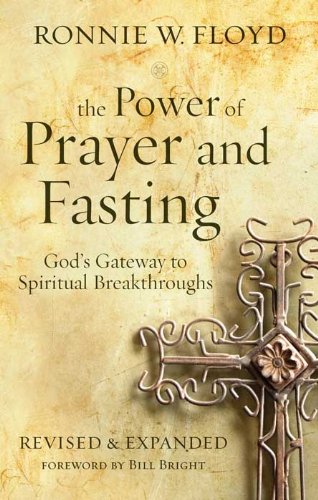
The Power of Prayer and Fasting – Ronnie W. Floyd


© 2010 Nashville, B & H Publishing Group

Ronnie Floyd is the pastor of a large and growing church in northwest Arkansas. The church actually exists in two campuses (First Baptist Church of Springdale and The Church at Pinnacle Hills). His most recent (as of last month) accolade is to be the newly elected president of the Southern Baptist Convention.

When I received this book from the North American Mission Board, I thought, “This will be good. I’ve been wanting to study a little more into fasting.” Within the pages of this “Revised & Expanded” edition, I found many challenging and worthy reminders of the call of Scripture for God’s people to be not only a people of prayer, but also a people who fast. Floyd includes a number of heart-touching testimonies of how prayer and fasting have become essential in his own life and ministry as well as that of his church and other people he has had influence with.

One of the most mind-numbing challenges I encountered as I read this book was the call to bring the local church into a corporate time of fasting. Floyd defines fasting as the “abstinence from food with a spiritual goal in mind.” (see page 4) And his encouragement to the body of Christ to fast is based on that definition. I can agree with him, that this is the basic definition of fasting. I think that the process can be expanded to abstain from other things (like media), and that the purpose of the fast is spiritual in nature. While there is such a thing as a fast for the purpose of weight loss, this book is dealing with the spiritual kind of fasting.

The problem with my expanding his definition lies in this: when we abstain from food, it is doing away (for a time) with something that the body cannot live without. Refraining from watching television or using smart phones, while these things seem important to a modern society, is not necessary to the survival.

Floyd bases his thesis (and includes it in the title of the book) on fasting and prayer as a means to tap into the power of God. I don’t think that this is his ultimate intention (he even says as much in the book), but the reader often comes away with this impression: that if I will pray and fast, I will experience magnificent power from God. I would suggest that if the reason for one’s fasting is to tap into godly power, then the intention is a false front. My best understanding of fasting and prayer is that the purpose of these activities is not for me to get something from God, but for me to focus my entire being on Him. Prayer and fasting are for my sake in the respect that they bring me into God’s presence for the purpose of complete worship. To approach them with the thought that “if I do this, I get to see something spectacular” (which is a selfish realm from which to start) I miss the point of prayer and fasting altogether.

I think that this is a good book for Christians to read, but I would advise caution not to get caught up in the selfish side of Christian disciplines. Instead I would encourage (as Pastor Floyd has encouraged me in the writing) to practice both prayer and fasting, but to do so with the goal of spending precious time with our Father in Heaven. (I can also agree that doing so will open our eyes to a greater spiritual explosion than ever before—but that’s the residue, not the intention). (3 out of 5 reading glasses)
 
—Benjamin Potter, July 1, 2014

Wednesday, September 9, 2009

Called and Accountable – Henry and Norman Blackaby

© 2007 New Hope Publishers, Birmingham

Henry Blackaby has been a favorite of mine since I studied
Experiencing God the first time some 20 years ago. Now he has teamed up with his son Norman to compile and expand the material in his study Called and Accountable: Discovering Your Place in God’s Eternal Purpose. In six short chapters, the Blackabies wrestle with the major questions of a Christ-follower’s calling:
  • Why does God call us?
  • What is a call?
  • Who are the called?
  • How am I called?
  • When am I called?
  • How do I live out the call?

Most believers struggle with just these questions, and we are all at some point on the spectrum in dealing with them.
One drawback to the book comes in most of the elder Blackaby’s writings—namely, that parts of the text draw heavily on the principles introduced in Experiencing God, and thus from time to time the reader feels he is simply reading an advertisement for or testimonial to Experiencing God. Otherwise this is an excellent primer on finding and living out one’s call to God’s kingdom purpose.

I rate this book 3 out of 5 reading glasses.


Benjamin Potter, September 9, 2009

“Become a
New Hope Book Review Blogger. Visit www.newhopepublishers.com for more information.”

Friday, August 24, 2007

Chazown – Craig Groeschel


My review of Chazown by Craig Groeschel has been posted over at Pastor Bookshelf. If you're looking for a book to help you bring focus to your Christian walk, this one is pretty good. It's not without its distractions, but the interactive style is enough to make any Christ-follower say, "I can do this." Don't pick this book up if you don't want to be responsible for focusing your life, though.


I gave Chazown four and a half thumbs.


Popular Posts

Labels