Showing posts with label Young Adult. Show all posts

Thursday, June 22, 2017

Hello Stars – Alena Pitts (with Wynter Pitts)


©2017  Zonderkids, Grand Rapids


The author of this book is a young (very young) actress/model who got her start in the recent film War Room. She teams up with her mother to pen this book about a young girl who literally falls into an acting role.


In some respects, Hello Stars is fairly easy to categorize—it’s a book by a twelve-year-old girl writing about an eleven-year-old girl and what can happen if life takes a turn. Choosing to abide by the writer’s motto, “write what you know,” Alena tells a story that could be very similar to her own. Is it any wonder that the book is targeted to preteen girls? It is a book that brings faith to the forefront in both family and workplace settings. Even with all of this right up front, the book itself categorizes itself in a laundry list of titles: it is part of the “faithGirlz” books developed by Zondervan’s Zonderkids division; it proclaims on the cover that it is the first in the “Lena in the Spotlight” series (which advertises book 2, Day Dreams and Movie Screens, is available in bookstores and online). So, choose a category and settle in for a nice story.


The story, told from the voice of 11-year-old Lena Daniels, brings the reader into the heart and mind of a preteen girl. She has her special friends at school, she loves her family, and she would just die to meet her favorite singer, Mallory. When she prays that her video greeting to Mallory will win her an opportunity to spend time with the singer, she is convinced that it’s a flop. And then the call comes that Lena has been chosen to star opposite Mallory in an upcoming movie based on faith.


The book is a good read and will appeal to its target audience for a variety of reasons. It speaks in a voice that is familiar to them, it addresses topics and dreams that most (if not every) preteen girl is concerned with, and it bears a positive message about faith and God.


As with any book of this nature, and especially first outings for an author, the story does have some drawbacks. It will have limited appeal even among young female readers because it has a tendency to “preach” a lot. Not that the sermons are bad, but it may find its way only into the hands of girls of faith. The tone and message of the book will help this limited audience to grow in faith (just as the main character does), but if the desire is to reach an audience outside the Christian community, the authors and the publisher will find an uphill battle.


All in all, I’d have to give the book 4 out of 5 reading glasses for a really fun summer adventure offered by a first-time author. I did find myself enjoying the family I met in the pages of Hello Stars (almost to the point of checking out book 2) even if I’m not a preteen girl (I am the father of one, though).


—Benjamin Potter, June 22, 2017

(I received this book from the publisher for the express purposes of this review.)

Tuesday, March 26, 2013

Theodore Boone: The Accused – John Grisham


©2012, Dutton Children’s Books, New York
The Accused (Theodore Boone Series #3)


In his third outing as an author of juvenile fiction, John Grisham is showing a practiced hand. Not only is the hero (Theodore Boone, Kid Lawyer) a likable young man, he is also extraordinary. How many thirteen year old boys are all but partners in their parents’ law firm? How many are liked by everyone? How many smarter than the entire staff of their Junior High School? Well . . . in real life probably none. But in Strattenburg, there’s only one – Theo Boone!

Opening paragraphs of The Accused call on readers to remember TheAbduction (Theo’s sophomore appearance) with the beginnings of the re-trial of Pete Duffy for his wife’s murder. But the defendant has disappeared. [Readers who missed the first two books in the series will want to catch up with Theo’s cases from the very beginning.]

What follows is not focused on Duffy (although his case is a running thread throughout the story), but rather on Theo’s travails as a victim of sabotage, vandalism, and framing. We know that he’s innocent, his parents and uncle know he’s innocent, the faculty and administration of Strattenburg Junior High know he’s innocent. In fact, it seems that everyone knows that Theo is innocent except for the police.

A couple of things are disturbing about this book: the helpless feeling the reader gets as his hero is being hounded by the police as well as his stalkers (this can be chalked up to the good writing). Perhaps even worse, though, is the thought that police can enter a school and use the same bully tactics which one sees on television with a thirteen-year-old. And this without his parents or lawyer (in this case both might be the same) present—and when the parents do enter the scene, they make no fight for a minor having been treated so. [Note: since I am not an expert in the law or in police procedure, I would not claim to know the legality of this—I just find it disturbing.]

On a lighter side, readers will enjoy the moment from Animal Court. It provides a needed rest from the struggle of fighting an unknown assailant, and gives more than a laugh or two.

Again, Grisham fans will be satisfied, as will suspense and young adult mystery readers. The writing is on par, the action is compelling and the characters are well-developed. I give Theo Boone’s third story The Accused four out of five reading glasses.

—Benjamin Potter, March 26, 2013

Monday, January 7, 2013

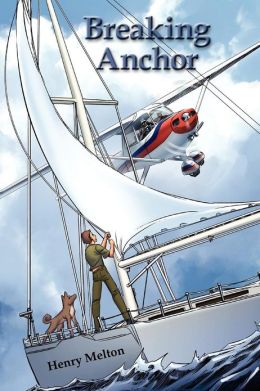
Breaking Anchor – Henry Melton

Breaking Anchor©2012  Wire Rim Books, Hutto, Texas

Henry Melton just keeps on churning out books. He is constantly working on making his stories available through print, e-publishing, and occasionally he releases one of the good ones serially online. His longest-running series of Young Adult Science Fiction is the Small Towns, Big Ideas series which follows high school-aged heroes and heroines from small-town America into some interesting adventures that have included extra-terrestrial life forms, super-intelligent technology, and time travel. He’s also hard at work on the recently developed The Project Saga, which started in modern times but promises to carry readers drastically into the future from Earth and into the far reaches of the universe.

But today’s story is part of the Home Planet Adventures series. Tommy Dorie is on the verge of becoming a man. He’s still caught up in the throes of high school finals week when his father Nick sends him on another goose chase. Can Tommy risk ignoring yet another pop quiz, or could it really be serious business this time around? Since the loss of his mother just a few months before the story begins, Tommy and Nick have developed a strained relationship highlighted by communication through text codes developed by Nick because of his secretive job.

Tommy finds himself caught up in corporate battles that really belong to Nick. His only hope for survival is to stay away from the company goons who are after the Dorie family sailboat. The secrets keep revealing themselves as Tommy works to rescue Nick and his co-workers along the way.

As per usual, Melton treats his readers to a book that is chock full of information about a lesser known pastime (sailing in this case) and technology. Breaking Anchor is another of those “hope it’s not true, but maybe . .  .” stories that calls the reader to think about the big what ifs of life that so often are just ignored in preference for regular life. Between the pages you’ll find action, intrigue, passion, and excitement. And a smarter than average dog. I have to give Melton another five-reading glasses review for this little gem.

—Benjamin Potter January 7, 2013

[This book was received from the publisher for the purpose of review. All opinions are my own. No other compensation has been received in order to influence the reviewer.]

Friday, September 28, 2012

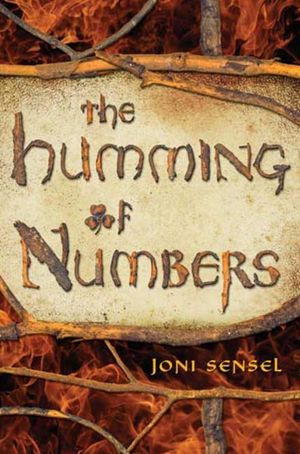
The Humming of Numbers – Joni Sensel


The Humming of Numbers© 2008 Henry Holt and Co., New York

Being one of those who is always on the prowl for cheap books to introduce me to new authors, I must admit I don’t just lap up books because they are free or nearly so—something has to appeal to get me to give it a try. The Humming of Numbers had several of those qualities: I found it at a dollar store (you know, those stores where “everything’s a dollar”), it was young adult fiction which has a certain appeal because it usually reads quickly and there is less need to turn on the inner censer at language or graphic descriptions, and it was set in an ancient English abbey (promising a faith element that appeals to my preachery side). What I found was something that gave me ups and downs in my reading moments.

Aiden, a novice monk who is nearing the time of taking his final vows, wants to join the abbey’s Scriptorium to copy and illuminate scriptures. Lana, the illegitimate daughter of the local Lord, is taken to the abbey to work a penance for attempting to defraud pilgrims with false relics. They are an unlikely pair indeed, but when Viking raiders attack it falls to these two young people to save their community. Aiden hears numbers humming from everyone and everything that has life (a talent he has suppressed all his life because no one believes him, and worse will ridicule him for), and Lana practices wood witchery. These traits will draw them together and help them win the day in the end.

The story is well-written and woven into the fabric of time with great skill. It is a compelling story of mystery, magic, and mayhem that promises to hold the attention most readers. I can applaud Sensel’s use of wordcraft to its fullest. Even in her description of Lana and her birth situation, there is an unquestionable use of language. Her story-building skills and characterization as well as descriptive passages call for the reader to read, read, read. Nothing can be more important for an author than to entrance their reading audience to this point.

Even so, I am disturbed by a couple of things that I encounter in the book. First, as a YA novel, there are some passages that would cause me to hesitate in recommending it to audiences younger than fifteen. While there are no blatant sex scenes, there is an implication toward them. Another, probably more, disturbing thing for me (as a pastor/man of faith reading the book) is the address of Christian faith throughout the book. It seems that (with at least some historical foundation) the established monks of the abbey are seen as stern and given to retribution on behalf of God. On the other hand, the witch of the story is seen as having a more genuine faith.

Because of this I give this book three out of five reading glasses.

—Benjamin Potter, September 28, 2012

Tuesday, January 24, 2012

Icefall – Matthew J. Kirby


© 2011, Scholastic, New York

Last year I discovered a brilliant new writer—Matthew J.Kirby—by virtue of our school’s “Book Fair.” His first book—The ClockworkThree—was filled with signs of a master wordsmith. Buildings and forests came to life. There was magic in the words—from beginning to end. The result of that read was two-fold: I am in the process of reading The Clockwork Three in pieces to my children as part of their bed-time routine (it takes awhile because we’re only good for about five pages at a time); and I couldn’t resist getting his second book (which I also found at a school book fair).

Icefall mixes myth and legend with period adventure and coming of age. It is the story of Solveig told in her own words. She is the second daughter of a Norse chieftan/king, sent with her older sister and younger brother to a safe haven while her father wages war against a would-be suitor for her sister, Asa. The story begins slowly but builds as you read—you will need to allow three or for chapters to get into the story—and the window into the world of old Norse legend is priceless.

We encounter berserkers, the elite fighting force of the king. Men who have learned to call upon the beast within for power during battle have been sent to protect the small band made up of the king’s children, their guards and the servants who attend them. The berserkers arrive with Alric the skald (story-teller) just as winter arrives at their fjord.

As you read you will hear tales of Odin and Thor and Fenric (the Wolf). You will get caught up in the intrigue, the battles, and the stories of treachery. All the while you will laugh with Solveig, cry with her, hurt with her, tremble with her as she develops her skill as a skald in her own right.

One of the drawbacks to the book is the story that is inserted between most of the first chapters—meant to provide some of the characterization and aid the plot development, these little one- and two-page breaks do more to distract the reader than to further the story (it is my opinion that the book would read actually better without them). Another tactical error on the part of the author is the choice of first person active voice. He is consistent throughout the book, and the first person telling is good. However, the present active voice takes some getting used to.

Once you have mastered the voice of the story, you will be caught up, though—so get this book—buy it, borrow it, don’t steal it—and read it. I give the author three and three-quarters stars for a grand story with some issues (mostly at the beginning—by the end of the story you won’t want to put it down) in the telling.

—Benjamin Potter, January 24, 2012

[Just another note, in case you think Kirby is not worth reading (because I think he is): Icefall has received nomination for both the Edgar for best juvenile fiction and the Cybil for best Middle Grade Science Fiction/Fantasy. I think we'll be looking forward to much more from Mr. Kirby!]

Thursday, December 22, 2011

The Copper Room – Henry Melton


©2011 Wire Rim Books, Hutto, Texas

Christmas came early for me this year. I arrived at the post just a couple of short weeks ago to find a copy of Henry Melton’s latest installment in the Small Towns, Big Ideas series. When I find such a wonderful prize waiting for me, it’s hard to finish the reading I’m doing before cracking open the new title from Melton. But I restrained myself (for at least three days), then got right down to business and was (as always) glad I did.

Each volume of Melton’s YA series focuses on a teenage protagonist (or set of same) and the adventures they encounter. Most of the stories include a bit of romantic tension, but this is the first time that the relationship between our two main characters (Jerry and Lil) are thrust into situations that cause their “puppy love” feelings blossom more quickly than most.

Jereomy Harris helps his Uncle Greg build a copper Faraday Cage large enough to be a room. The point behind the invention is to make time stand still (inside or out). It’s the perfect place for Jerry to catch up/keep up with his studies for the last few months of High School. He can cram eight hours of study time in the room into about thirty seconds in the real world time.

Then he meets Uncle Greg’s neighbor’s daughter, Lillian. Lil is a cheerleader for a rival school. But that matters not to the two teenagers. They start seeing each other, then by accident they bump the controls to the Copper Room hurtling them decades into the future. During the course of the adventure, they learn to operate the room keeping them out of trouble, while at the same time letting them influence change in society (even when society has taken it upon itself to self-destruct). 

What makes this time travel story different from most (including Melton’s own previous venture into the time travel genre) time travel stories is that Jerry’s time machine only lets travelers go in a forward direction. What makes this new story a different step for Henry is his dabble into romantic teenage struggles. I must applaud him on giving his characters restraint and commitment to purity.

He deals with history, future speculation, what-ifs concerning not only traveling in time, but also life on other planets, space travel, and re-establishment of a society after nuclear war. And he does it in a superb and readable manner. Thanks for the early Christmas, Henry. And reader, even if you don’t get to enjoy this story before Christmas, get it and enjoy it afterwards. I’m sure that you’ll enjoy it as much as I did. Five reading glasses.

—Benjamin Potter, December 22, 2011
 
[This book was provided for review by Wire Rim Books of Hutto, Texas. Opinions are my own.]

Thursday, September 15, 2011

The Clockwork Three – Matthew J. Kirby


Matthew Kirby is a new author (for both me and the reading audience in general). In his day job, he works with children as a school psychologist in Utah. If this debut novel is any indicator, he may be changing his day job soon. “Why?” you ask. I think that the success of this first novel can be attributed to his love for telling stories—according to his bio, he’s been doing it since he was a youngster.

The city in the story bears a strong resemblance to 19th century New York because of the inspirational story of a boy who almost single-handedly derailed the abusive child-labor practices. Kirby’s story focuses on three children who have their own spectacular stories to tell. Giuseppe is a young street musician whose life is changed the moment he fishes a beautiful green violin from the wreckage of a shipwreck in the bay. Hannah, a maid in the grand hotel in the heart of the city, is struggling to be the sole support of her family (a disabled father, his wife who must stay home to care for him, and two younger sisters—twins). She has given up her hopes of education although she continues to read the classics. A strange guest with a Russian protector becomes her friend and provider. And then, there is Frederick, the orphaned apprentice of a humble clockmaker. Frederick is focused on becoming a journeyman so that he can open his own shop.

The story brings these three together in the most unlikely of situations. It is filled with action, adventure, and magic. The characters—heroes and villains alike—are compelling and lifelike. But the most exciting part of the book is its destiny to become a classic. Kirby’s use of descriptive language and movement provides excellent examples to be used in any literature or creative writing class. He is truly a wordsmith of the highest degree.

I have to give him five out of five reading glasses for his first effort, and can’t wait to get my hands on Icefall (his second novel due out in October). [Modesty prevents me from begging for a review copy—actually no it doesn't and I'm begging, Scholastic are you listening?]

—Benjamin Potter, September 15, 2011


Monday, August 29, 2011

Star Time – Henry Melton


©2011 Wire Rim Books, Hutto, Texas

As promised in an earlier post, here is a review of Henry Melton’s debut story in The Project Saga, Star Time.

Life is going on as usual (or at least as usual as it can) for the residents of Austin, Texas and the surrounding area. And then warnings of ensuing danger explode. Enter a witch, a wizard, and a seer (so designated in the reading) and you have fodder for a great Science Fiction series. The title of the book refers to the moment when the lives of Sharon Dae (the witch), Abe Whiting (the wizard), and Ed Morgan (the seer) are thrown into turmoil by the death of Betelgeuse, a star in the Orion Constellation. Radiation spikes and night-time instabilities throw the entire Earth into a frenzy.

Hiding in the shadows of the sky are is a spaceship filled with a race of hunters—aliens who are looking for a treasure world filled with new prey. The treasure for the reader is the numerous tales that can follow the lives of those captured by the aliens in the process of keeping the invasion at bay, the robotic community left behind to pick up the pieces in post-star Austin, an the scientific followers in Australia who provided the first global warnings of the supernova that was Betelgeuse.

The building of the foundation is so intriguing that you want to keep up with all the characters—which Melton holds in promise as he unveils new titles in the Saga. To tide us over he’s included two bonus short stories at the end of Star Time to give a glimpse at the variety of the upcoming novels in the series. As with all of Melton’s books, you’ll want to read every drop. (Four out of five reading glasses.)

—Benjamin Potter, August 29, 2011
 
[This book was provided for review by Wire Rim Books of Hutto, Texas. Opinions are my own.]

Tuesday, July 26, 2011

Bearing Northeast – Henry Melton

©2011 Wire Rim Books, Hutto, Texas

This year, Henry Melton has already been busy. Two books have already been released. The first is this edition in the Small Towns, Big Ideas series.

In this episode, Elizabeth (Biz) and Seth are trying to keep life together after losing their parents. They’ve even developed rules to keep them together—with Biz as the guardian of her minor brother Seth. Upon making final arrangements to sell the summer place in Crescent City, California and move back to the house in Fresno, something falls from the sky and damages a tree. That something turns out to be a canister with a semi-broken GPS device inside.

Seth convinces Biz to take a road trip to discover the origin of the device (which has a Northeasterly Bearing displayed) when she gets down-sized at her job. The cross-country adventure takes them through Yellowstone, by the Great Lakes, and on into Canada. The small town involved in this story is actually Churchill Falls, Labrador, Canada. It is a small village where electricity is produced for much of southeastern Canada and even northeastern United States. The local science club is trying to harness some of this energy to do something new.

This one reads like a travelogue, an adventure story, a spy novel, and a Twitter conversation between Seth and his on-line buddies.

The big drawback to this story lies in the occasional tedium that accompanies the space-age stories—even if America’s space program seems to be grinding to a halt in the same year that the story is published. All in all, Melton has shown himself well once again, and his debut of new series The PROJECT Saga is just around the corner (with review in a matter of weeks), so Bearing Northeast earns another four out of five reading glasses.

—Benjamin Potter, July 26, 2011

 
[This book was provided for review by Wire Rim Books of Hutto, Texas. Opinions are my own.]

Wednesday, May 4, 2011

Sir Quinlan and the Swords of Valor – Chuck Black

© 2010 Multnomah Books, Colorado Springs

Chuck Black is a former F-16 fighter pilot and tactical communications engineer. He now writes young adult fiction. Sir Quinlan is the fifth in his The Knights of Arrethtrae series (which is the second series dealing with “The Kingdom Across the Sea” featuring the King and the Prince). This is my first encounter with the stories, and I must say that I am well pleased.

In this adventure, the title character moves from being the unassuming—even cowering—Knight of the Prince called Twitch to leading the elite group of Knights known as the Swords of Valor. He deals with apathy, distraction, and failure in his quest to become the Knight of the Prince that he wants to be.

While this is one in a series of stories, the adventure—like all good series adventure stories—could stand on its own. The author includes enough of the background story to understand its connection with previous installments, but weaves a tale that could stand on its own and engage most young men who love adventure stories (and not a few young women).

The story itself (and I’ll assume both of Black’s series) is a rather thinly veiled allegory of the gospel message of Christianity. For the reader coming from the background of the Christian faith the relationship between Jesus Christ and the Prince takes no effort. Other readers would have no trouble enjoying the story, and this book (along with its sisters) might be an excellent starting place for a young person to talk to friends about matters of faith—or for parents to talk with their pre-teens and teens about them as well.

One drawback in the book is the use of ancient languages and cryptic abbreviations to point to specific allegorical references. For example, the abbreviated names “Disty” (for distractions) and “Bli” (short for blindness) in reference to the cute creatures used by the forces of the Dark Knight to create apathy among the Knights of the Prince; and the name of the creature that represents passion—penthomoth—whose name is taken from the Greek word pentho which means “passion.” To discover these cryptic references one must read the study questions and answers located at the end of the book.

The story itself is well-written and has the ability to stand on its own without the extra study helps that have become popular in the publishing world today. A simple footnote concerning the above mentioned references would be sufficient for the inquisitive reader.

Finally, I should mention that included (along with the study questions) are a couple of artist’s renderings of the unfamiliar creatures encountered in the book and a musical score for a song that relates to the Swords of Valor (“Ride of the Valiant” by Emily Elizabeth Black) as a sort of postlude to the story.

Lovers of swordplay and knightly quest/adventure will love this story as much as I did. In fact, I may look for the previous stories about Arrethtrae just to go on more adventures with the Knights of the Prince. Four out of five reading glasses.

—Benjamin Potter, May 4, 2011

[Disclaimer: I received this book for free from WaterBrook Multnomah Publishing Group for this review.]


Thursday, October 7, 2010

Follow That Mouse – Henry Melton

©2010 Wire Rim Books, Hutto, Texas


After an outing into a different series (debut “Home Planet Adventures” story Pixie Dust), Melton is back with a new “Small Towns, Big Ideas” story. This time with the smallest of towns—Ranch Exit, Utah—and the biggest of ideas—save the world.


Most of Melton’s stories fit fairly easily into the Science Fiction category, others are more in line with the Fantasy genre. Follow That Mouse brings together the best of both these worlds—the science, and the fantasy.


Dorothy Comal (Dot Com to her friends) and her friend Ned Kelso stumble onto a war of wizards that threatens to wipe Ranch Exit completely off the map. And this while they are working on school projects designed to put it on the map.


If everything works out, they’ll save not only Ranch Exit, but also the world, and find each other in the process. You’ll like this story, and it even has dancing mice! (five reading glasses, this is Henry Melton at his best. More awards in the future?)


—Benjamin Potter, October 7, 2010


Wednesday, May 26, 2010

Pixie Dust – Henry Melton

©2010 Wire Rim Books, Hutto, Texas


I first encountered Henry Melton’s Young Adult Science Fiction a couple of years ago with his sophomore outing for the “Small Towns, Big Ideas” series, Roswell or Bust, and I was hooked. Having not been a fan of SciFi, but a big fan of YA fiction, I approached the read with trepidation. After that book, I find myself waiting (sometimes impatiently) for his next book.

This latest offering is a slight departure from the “STBI” series in that it’s set—not in a small town—in the city of Austin, Texas, and the featured character is slightly older than his typically high school-aged hero. He addresses this discrepancy by creating a new series—“Home Planet Adventures.”


Now to the reading, Jenny Quinn is a budding physicist working on her graduate project dealing with a new substance identified simply as dark matter. An accident in transporting the dark matter results in her personal contamination with the stuff, and the death of her professor.


Losing her professor, her research, and her desire to continue her education in one fell swoop, Jenny finds herself on the run, trying to hide the fact that she now can fly. She finds unlikely friendship in a lone trucker and refuge among the Carnies of a traveling show. By the end of the story, she’ll have opportunity to bring to life her brother’s comic book heroes and discover the truth about her professor’s death.


Melton jumps directly into the action with the catastrophe involving a dark matter explosion, and keeps everything moving as Jenny finds a way to keep herself alive and moving while hiding her new ability from the public view. The author also gets a chance to give tribute to his own childhood infatuation with the comic book industry not only with the story line, but also by dividing the story into numbered “issues” representing each segment of the tale. If you like SciFi you’ll want to read this book; if you like comic books, it will be fun as well; if you’re a Henry Melton reader, you won’t want to miss this outing.


Four out of five reading glasses.


—Benjamin Potter, May 26, 2010


Thursday, October 8, 2009

Golden Girl – Henry Melton

©2009 Wire Rim Books, Hutto, Texas

Henry does it again! Golden Girl is excellent Young Adult Science Fiction. This episode of “Small Towns, Big Ideas” is inspired by Oquawka, Illinois (and being a transplanted Illinoisan, this is exciting to me). Plus, tucked away in the pages is a nod to my old home for three years--Louisiana, MO!

Debra Barr loves her small town, and she’s trying to convince her possible boyfriend, Cliff, that it can be just exciting as his native Chicago. Trouble starts when she wakes up and finds herself in the dreary, dark future and is told it is up to her to save the world.

Golden Girl offers a wide assortment of genres for the avid reader: time travel, end of the world space fiction, with a little romance on the side. Get ready for a twist or two that you didn’t see coming before the story is over.

As with all of Melton’s books so far, you can’t go wrong when you pick this one up.

Four out of five reading glasses.

—Benjamin Potter, October 8, 2009

Note: Some of you will notice the new disclaimer in the sidebar. Thanks to Henry for his research that keeps us honest.

Monday, May 18, 2009

Congratulations to Henry Melton


Henry Melton just keeps winning awards. The announcement came out recently that he has won the Golden Duck for Middle Grades in Science Fiction for last year's Lighter than Air. Congratulations, Henry.

In honor of this coveted honor (how many times can I use the word honor in this post?), I contacted the prestigious author and he has graciously consented--so, here's another Author Interview brought to you with painstaking care from the good folks at Loom & Wheel (with gratitude to Wire Rim Books):

Benj-O: To begin with, can you give us a thumb-nail sketch about yourself? Who is Henry Melton, what makes you tick?


HM: Since elementary school, I can remember being fascinated with rockets and gadgets, I cobbled together my own gunpowder (from the formula in Jules Verne's novels) wired up electronic musical instruments, and when I worked as a TV and Radio Engineer, I was always tinkering with some new gadget for the DJ's.  Then software happened and for twenty some years I did the same thing, only with 1's and 0's.  Throughout my life, I've been inspired by science fiction, and it's only natural that I'd tinker together some of that as well.


Benj-O: How did you start writing? Was it a whim, or what?

HM: I told stories to the neighbor kids, but in school, I wrote a few little things that today would be called flash fiction–a few hundred words at best.  But then one day, our biology teacher gave us a loosely worded assignment, "Tell the story of a tree."  It was during the poly-water mystery, and with a grin, I set out to write my assignment as a science fiction story, with the main character an intelligent water drop.  It worked.  The biology stuff was the background 'scenery' of the story and the 'passing of the torch' plotline was good enough from a character viewpoint as well.  Mr. Branch loved it as well.  He read the paper aloud in class and gave me an 'A'.  I turned around and turned in the same paper as an English composition assignment and got another 'A' for the same work.  I think that from then on I was hooked. 


Benj-O: There is often a perceived formula in fiction today. Do you follow a formula as you write?


HM: It's hard to answer.  I know that over the years I've learned what works for me, so I do follow the same development process from one book to the next, but it's certainly not the formula I've seen described for certain classes of fiction.  Learned craftsmanship, yes.  Formula, no. 


But certain words of wisdom do apply, and can be expressed as simple rules.  Just like spelling and grammar, don't break the rules unless you understand them.


Benj-O: What advice would you give to aspiring authors?


HM: Write.  Write a lot.  I've been writing for decades now, and while some of the earlier stuff worked, the vast bulk of it didn't, and I'd never have been able to learn the difference without writing it all.  You'll need to learn the mechanics of writing, the craftwork skills of it all, and you'll need to develop your voice.  When I had the opportunity to lecture at the George Benson Christian College in Zambia, I put together some presentations covering this, so rather than ramble on here, I'll just point to:

http://www.henrymelton.com/0/WriterResources.html


Benj-O: You often hear writers talking about how much they read in preparation for a writing project. What kinds of sources do you find helpful when researching for a book?


HM: I am inspired by place.  I've traveled a lot and frequently I'll discover a location, often a small town, that speaks to me.  While I'm there, I'll talk to the people, take photos, and listen to the sounds.  Maybe six months later, I'll start a story located there, and of course, I'll find my initial research lacking.  I'll google like mad, and take advantage of every internet resource out there.  And then, if I'm lucky, I'll get to make a second visit after the first draft, and I'll get to walk Schuyler Street and see what the church bell looks like from the sidewalk and notice the cannon on the courthouse lawn.  Knowing what things really look like is invaluable to me.  I'm writing these scenes that play out in my head and with real details, whether they show up in the text or not, the characters are more vivid.


Benj-O: Your writing style is very readable. Are there any authors that have influenced that style?


HM: That's hard to tell.  When I was learning what I liked, I was too young to pay attention to style.  I know I liked the Heinlein books I found in the school library, the Sturgeon stories I discovered later, and the no-limits adventures of Murray Leinster (Will F. Jenkins).


Benj-O: I know that you have chosen the route of self-publishing through Wire Rim Books. How did you decide on this route for getting your books in print? Is there any advice you might give to someone considering self-publishing?


HM: It was the gray hair.  I'd been trying to get my novels published for a long, long, long, long time.  I'd been following the rules and listening to the advice of my elders.  I sat in the back of the 'How to Get Published' panel discussions at the science fiction conventions.  But the publishing landscape changed.  The old wisdom had become dated.  Here's the new wisdom.  You can get yourself published, for a minimum of up-front cost.  You just are not likely to sell your books to anyone beyond your circle of family and friends without a life-changing dedication to self-promotion, and a good book.


Benj-O: So many in the publishing world are prejudiced against the self-published authors, have you encountered any resistance to your books because of this choice?


HM: As a self-publisher, I have to say that the majority of self-published books are not readable.  It's harsh, but it's the truth.  I have total sympathy for the reviewers who reject all self-published books sight unseen, but it does make it very hard to get high profile reviews when you have faith in your book and no one will look at it.  I would love to get on a library recommended list, but the rules for those lists require reviews from certain standard publications, and those places have barriers up against the flood of self-published titles.  It's a no-win situation, unless you can find a back door review or win a contest or something like that.


Benj-O: Again, congratulations on your awards. Can you give us an idea of what it is like to receive acclaim from the industry?


HM: On a personal level, it is deeply comforting to know that other people can see good things in your books.  Every self-published author believes in his book, so how can you be sure you're not just fooling yourself?  Faith in yourself is critical to make sure you keep writing and keep working to improve yourself, but that faith doesn't prove your words are good.  The approval of friends and family, while nice, isn't enough either.  You have to rely on third party recommendations to let people know that there's something here that will be worth their while.  Word of mouth referrals, Amazon reviews, and the lightning strike of a contest win are immensely valuable.  There is nothing more satisfying than having total strangers applauding your work. 


Benj-O: What’s next from Henry Melton? What can we expect to see in the future?


HM: I wrote novels for many years before I decided to start Wire Rim Books, and I have three working in the queue right now.  When they come out is more of a marketing decision than a technical one.  If the cover art comes through in a timely manner, the next title will be Golden Girl, a time travel story.  The reality-bending, Follow that Mouse is likely to also come out this year, but whether it's a fantasy or Jungian Science Fiction is something I'm still undecided on.  After that, probably it will be Pixie Dust, a physics-based science fiction/ mystery with superhero subplots.  Eventually, I'll want to tap into the large number of short stories (published in the magazines) and novels (unpublished) that take place in my Terraforming Project time line.  But that's still a couple of years away.  


Thanks again, Henry. Keep on writing, and entering those contests.

Thursday, April 9, 2009

Falling BAKward – Henry Melton

©2009 Wire Rim Books, Hutto, Texas


In 2008, Henry Melton received the Darrell award for Emperor Dad, the first of his Small Towns, Big Ideas stories. And now he wows us with another installment. And again he doesn’t disappoint. Set in Chamberlain, South Dakota, this YA interstellar tale will have you racing to get to the end, just to see how it turns out.


Jerry Ingram is just digging for Indian artifacts, hoping to make an important discovery. What he doesn’t count on is discovering strange new worlds and new civilizations – in his dad’s sunflower fields.


I have been impressed with Melton’s writing since I discovered him about a year ago. I’ve come to expect the best from his stories, his characters, and his conflicts. In Falling BAKward, the sci-fi aficionado will be well pleased to find alien races, intergalactic wars, telepathic communication, espionage, and even strange languages of the aliens.


The only distraction that I found in this book was the extensive use of the Bak language. However, much of this was interpreted at one point or another in the book. My suggestions for the avid reader—get this book and enjoy. You have opportunity to read it in traditional trade paperback form or in a variety of e-book options. If you get the TPB you get to enjoy the story and the coool cover art as well.


Here’s four more reading glasses for the master of YA SF.


—Benjamin Potter, April 9, 2009

Monday, October 13, 2008

Lighter Than Air – Henry Melton

©2008 Wire Rim Books, Hutto, Texas


Henry Melton has been a busy bee in the publishing department in 2008. So busy in fact, that he’s kept me busy reading young adult science fiction for review. Melton is the Darrel Award winning author of Emperor Dad, and the prolific publisher of his own “Small Towns, Big Ideas” series of YA Fiction. Lighter Than Air is the fourth in the series, the third that has been published in 2008.


Jon Kish is looking for the perfect Halloween prank. Every year the older boys at the Munising, Michigan High School try to out-do one another with the perfect prank. Reigning champion Bud Falco is in Jon’s sights, but Kish doesn’t know yet what he’ll do to upstage Falco’s re-wiring skills. Then he happens upon George Perkins’ work lab filled with an experiment called “buckyfoam.” Jon and neighbor George get reacquainted as the older man explains the process to Jon who soon finds himself in a loose apprenticeship to George.


The story is complicated (or enhanced depending upon one’s point of view) by the family dynamic for both of the scientists. George has moved home to be near his mother whose health is failing, leading eventually to a fatal stroke. Jon and his younger sister are involved in their own sibling squabbles to the disappointment of their weary mother—who discovers that among all the other issues in her life, she has stomach cancer. Jon’s father, Sam, disappeared five years earlier creating overwhelming hardship on his wife and children as they try to cope and keep the home place going.


In Lighter Than Air, Melton weaves a tale of secrets and suspense, science and pranks, emotion and intrigue. One of the drawbacks to the story lies in the same gripe I have with many science fiction stories—detail. While detail is important, some of the necessary detail when dealing with scientific experimentation gets tedious. Even so, the tedium of the scientific jargon is minimalized by Melton’s exquisite ability to tell a story. The CIA story line that follows Cherry Kish’s search for her absent father keeps the attention of any fan of espionage fiction. And the scene where Jon and his friend and co-conspirator, Larry, unleash their UFO on an unsuspecting Halloween Festival crowd is priceless.


The scary part of the story, though, is not how the characters deal with the issue of death, but that of Internet predators. In this case, the predator is a terrorist operative posing as a secret agent who volunteers to help Cherry find her father. We later find out that the on-line friend is just using Cherry to ferry information to his terrorist friends without detection by the US government. I found the possibility all too real, and you might as well.


As always, characterization and plot development are superb. Melton has another winner with Lighter Than Air. I give Lighter Than Air four out of five reading glasses. Look for more “Small Towns, Big Ideas” stories in 2009.


—Benjamin Potter, October 13, 2008

Popular Posts

Labels