Saturday, August 10, 2013

Plastic Donuts – Jeff Anderson


Plastic Donuts: Giving That Delights the Heart of the Father

© 2012 Multnomah Books, Colorado Springs

Sometimes it takes the act of a child to get our attention. That’s what author and financial advisor Jeff Anderson discovered when his young daughter presented him with, you guessed it, a plastic donut.

The gift which became a happy game between father and daughter made this money-numbers man begin to think about his own faith and giving habits. After all, the toy was one of the toddler’s prized possessions. She wanted Daddy to have something special—and it delighted her to give it while delighting him to receive it.

Anderson’s point in the entire book (readable in one or two sittings, depending on your rate of reading) is that those of us who are God’s children should get to the place of giving to God that which brings us most pleasure—and that in turn will bring Him most pleasure. The author makes the point that if one of his older sons brought him a plastic donut it would be little more than a joke, nor would the gift be well received.

Anderson addresses two of the most common giving traps into which Christians fall today:

First, there is the “give until it feels good” group—these are the people who give of the passing thought to God. Much like in the story of Cain and Abel in the Old Testament book of Genesis—we give to God out of our sense of duty, but only that which will not bother us to give. Consequently our churches are filled with untunable pianos, broken-down toys, and second-hand furniture that wouldn’t sell in the rummage sale. And we wonder at the state of our spiritual lives.

The other group (at another extreme) are the “give that 10% and not a half-penny more” givers. These are the modern-day Pharisees who have developed a legalistic view of tithing to go along with their legalistic view of worship, service, and church in general.

Anderson does not espouse not tithing, but he suggests that we, in our giving, can get to the place where the tithe doesn’t matter so much as the pleasing of God. What does God want from us? The very heart of us—that which brings a smile, a giggle of joy, a glow to our face—and when we give that, He returns that smile, that giggle, that glow from His very throne.

This is probably the best book on giving that has been published in a number of years. The author’s message moves us from no giving, and slow giving, to meaningful living giving. I’d recommend this to every Christian who wants to take the drudgery out of the Christian life, one plastic donut at a time. (4 out of 5 reading glasses)
 
—Benjamin Potter, August 9, 2013

[Disclaimer: I received this book for free from WaterBrook Multnomah Publishing Group for this review.]

Friday, August 9, 2013

Ransom Betrayal – Steven Hunt


© 2009, Electric Moon Publishing, Tulsa

It took me nearly four years to get around to reading Steven Hunt’s sophomore effort (his debut being Guardianof Light). A departure from his first and third novels, the first of what promises to be an action-packed series centered on John Ransom and his team of experts deals less with angelic/supernatural beings, and more with action and adventure.

Ransom, a spy/operative in covert activity—specifically disposing of unwanted officials secretly, effectively, and cleanly (read that “murderer for the government”) discovers a high-level betrayal at the very last moment of the job he tried so hard not to take. In the end, he is almost fatally wounded trying to get away from the assignment that will either kill or discredit him.

The bulk of the book is spent on his recovery from the accident, his finding himself again, and his re-establishing his good name by finding the mole in the organization and doing away with the bad guys.

Although it is a departure from the “other-worldly” material we encounter in both Guardian of Light and Chasing Christmas, Hunt likes to bring the Supernatural in, and does so in an exciting scene where Ransom, in a new-found faith, is able to receive a vision from God, and consequently diffuse another attempt on his life after he has fully recovered from his injuries.

This book has a lot to offer for the reader: espionage, intrigue, action, adventure. Hunt throws in a little romance along the way. The characters are likeable, the action is fast-paced, and we all look forward to another adventure with this team of wrong-righters.

The strong faith elements that characterize Hunt’s writing are definitely present here. It is always nice to see the church and the servants of the church portrayed in a positive light rather than as the conniving, superficial, hypocrites that we encounter in most main-stream literature.

One will also find a few draw-backs when reading the first Ransom novel. Some of the struggle in reading the book comes in the faith-based elements: our hero has a tendency (after his turn to faith) to become overly preach-y which may turn a reader off to not only the book but the message the author is trying so hard to convey. Also, in these moments of excessive spirituality, Ransom—a brand new believer—shows a greater understanding (if not, simple knowledge) of the Scriptures than one would expect of someone so young in his faith—and this without any discipleship from more mature believers.

Even so, I would like to see some more outings for Ransom. I also understand that if you did not acquire your e-copy (the only ones available) a few months within its publication (that’s 2009), you are out of luck for reading it. I would love to see someone pick up this series, re-releasing the debut o
f Ransom, and promising three or four (or more) more novels for readers to enjoy. It is an excellent rest for readers of The Executioner series or the Mack Bolan series or even the Nick Carter, Killmaster series and it doesn’t include scenes that require readers of faith who like action to switch on their internal censor for language, sexual activity, and gratuitous violence.

Keep writing the Ransom stories, Steve. Your readers want more. (4 out of 5 reading glasses)

—Benjamin  Potter, August 9, 2013

Tuesday, August 6, 2013

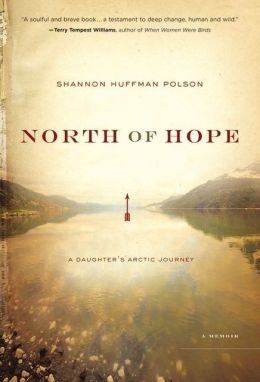
North of Hope – Shannon Huffman Polson

North of Hope: A Daughter's Arctic Journey© 2013 Zondervan Publishing House, Grand Rapids

First, my excuses – I’m late (about three months late) in posting this review. Excuse 1, life got busy as I was trying to finish reading and reviewing this book. Excuse 2, the book was really hard to read and I was finding other more favorable reading material. Excuse 3, I just got lazy.

That said, I will probably fall out of favor with the provider of these review copies for being so lax in my timing. Now, on to my thoughts:

The author is writing in response to the tragic loss of her father and step-mother. The book, because of this purports to be a book that will be cathartic to those who have lost loved ones. It reads very much like the journal that was used as the springboard, and then it jumps back and forth between the present, the past, and the accident that caused the writing in the first place.

I, for one, was not touched by the story line. It became tedious to sit through. I have no doubt that there was a good amount of cleansing, refreshing, and permission to move on for the author and her brother who took the journey with her. I struggled to see where reading of the journey of another so intimately would be of help to the reader.

I suggest that the audience for this book will be more limited than the publishers expected. If one would like to read on how to deal with grief, there are hundreds of other titles which would be more helpful. (1 out of 5 reading glasses)

—Benjamin Potter, August 6, 2013
 
[This book was provided to the reviewer by the publisher for the purposes of this review. The opinions are my own. I have not been otherwise compensated for this review.]

Monday, August 5, 2013

Catch a Falling Clown – Stuart Kaminsky


©1981 St. Martin’s, New York

Stuart Kaminsky follows up High Midnight with this Toby Peters adventure in which our ne’er-do-well hero finds himself returning to the small town of Mirador, California in search of a circus. Of course he isn’t welcome in the little town because of the last case that had him visiting—when he got on the grumpy side of the local law enforcement. They haven’t forgotten Mr. Peters and would just as soon he not have shown up again.

Toby’s problem is that he has yet another famous client. This one tied to the circus, namely Ringling Brothers’ famous clown Emmett Kelly (who performs as Willie). It seems that someone’s been trying to kill off the circus elephants in the off-season show that Kelly has hooked up with.

By the time Peters arrives, the targets are not only the elephants, but Kelly himself, and then the flying Tannuccis begin to fall victim to the murderous plot.

Kaminsky gives us another page-turning puzzle of an adventure. This time he includes cameo appearances by great director Alfred Hitchcock “doing research” for a possible film set on a circus lot. It’s interesting that when Hitchcock shows up, so do the accidents. Peters employs his regular team of misfit helpers to help him solve this mystery before he’s either dead or incarcerated.

Find a copy of this old story to enjoy over a cup of joe. (three and one-half reading glasses)
 
—Benjamin Potter, August 5, 2013

Friday, April 19, 2013

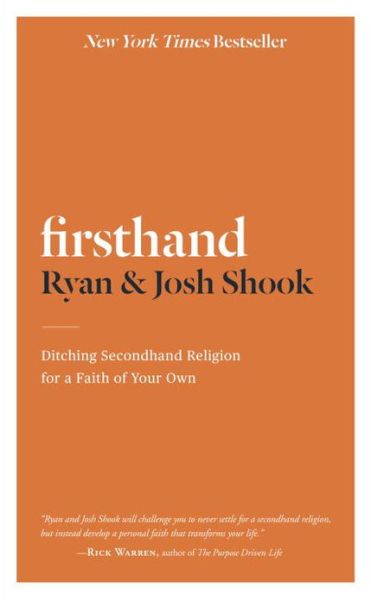
Firsthand – Ryan & Josh Shook


Firsthand: Ditching Secondhand Religion for a Faith of Your Own
[Update! My video endorsement of Firsthand by Ryan & Josh Shook can be viewed at my YouTube channel.]

©2013  WaterBrook Press, Colorado Springs

Brothers Ryan and Josh Shook grew up in church. In fact their parents planted a vibrant, exciting church in Houston. Now they are actively seeking careers far away from Houston. Ryan is a filmmaker living on the west coast, while Josh is a musician living in Nashville. And though they seem to be far removed from their roots in Texas, they write a book about how their faith roots are stronger than ever.

In a day when more and more people in the younger generation (in this case an age range of 16-26) are growing disillusioned with the faith of their parents, the Shook brothers have found the secret to faith that is lasting and real: stop playing at religion that is at best a hand-me-down from your parents and replace it with a firsthand, no-holds-barred relationship with Jesus Christ.

This book is less of a “how-to” book and more of a “what could happen” vision. Starting with their own wandering away from their parents’ faith and building on that with interviews and candid remarks from a number of people who had discovered the difference between plastic religion and real relationship, the authors weave a story that is at both challenging and a bit unnerving. There is no sugar coating here, just real admission of attempts and failures followed by struggle and success. Bottom-line advice from these two young men who have “been there” is to stop trying to be a Christian (based on what was handed down to you from your parents), and just build a relationship with Jesus.

This short 8-chapter book deals with all the things that church-goers try to do to get in good with God, and gives testimony and example of how one might stop going through motions and let their relationship grow. Their term, as the title suggests, for this authentic experience is “firsthand faith.”

This book is a good starting point when someone has grown disappointed in the church experience of their roots. While believers are encouraged to do the things that our church society has done as a sign of their relationship with Christ, the motivation is moved from marking your checklist of being a good Christian, to letting the actions flow from who you are.

Even so, because the book is focused on the generation of younger adults, those who are approaching or have even passed middle age who are dealing with the same questions about faith are neglected. This is not necessarily a fault of the authors or the publisher but a drawback built into focusing on a particular audience, limiting further (with age) an already limited audience (Christians or Christ-seekers). That said the book has value when someone (of any age) is struggling with whether what they’ve always believed is really real—especially when it is believed because that’s what they (or their family) has always believed.

Each chapter includes a sampling of quotes from a handful of the people interviewed in the researching of the book, some questions for deeper thought, and some practical application suggestions to put what the preceding chapter has discussed into action.

I would suggest that pastors and youth pastors, as well as collegiate ministry workers, would want to have a copy or two of this book handy to help young people who are dealing with questions of whether the faith they espoused at the age of 8 or 9 is real or not. The struggle of authentic faith is one that has been around for ages and will continue to haunt the church. In Firsthand the church has a resource to address this struggle head-on. I give the book 4 out of 5 reading glasses.

—Benjamin Potter April 19, 2013

[Disclaimer: I received this book for free from WaterBrook Multnomah Publishing Group for this review.]


Tuesday, March 26, 2013

Theodore Boone: The Accused – John Grisham


©2012, Dutton Children’s Books, New York
The Accused (Theodore Boone Series #3)


In his third outing as an author of juvenile fiction, John Grisham is showing a practiced hand. Not only is the hero (Theodore Boone, Kid Lawyer) a likable young man, he is also extraordinary. How many thirteen year old boys are all but partners in their parents’ law firm? How many are liked by everyone? How many smarter than the entire staff of their Junior High School? Well . . . in real life probably none. But in Strattenburg, there’s only one – Theo Boone!

Opening paragraphs of The Accused call on readers to remember TheAbduction (Theo’s sophomore appearance) with the beginnings of the re-trial of Pete Duffy for his wife’s murder. But the defendant has disappeared. [Readers who missed the first two books in the series will want to catch up with Theo’s cases from the very beginning.]

What follows is not focused on Duffy (although his case is a running thread throughout the story), but rather on Theo’s travails as a victim of sabotage, vandalism, and framing. We know that he’s innocent, his parents and uncle know he’s innocent, the faculty and administration of Strattenburg Junior High know he’s innocent. In fact, it seems that everyone knows that Theo is innocent except for the police.

A couple of things are disturbing about this book: the helpless feeling the reader gets as his hero is being hounded by the police as well as his stalkers (this can be chalked up to the good writing). Perhaps even worse, though, is the thought that police can enter a school and use the same bully tactics which one sees on television with a thirteen-year-old. And this without his parents or lawyer (in this case both might be the same) present—and when the parents do enter the scene, they make no fight for a minor having been treated so. [Note: since I am not an expert in the law or in police procedure, I would not claim to know the legality of this—I just find it disturbing.]

On a lighter side, readers will enjoy the moment from Animal Court. It provides a needed rest from the struggle of fighting an unknown assailant, and gives more than a laugh or two.

Again, Grisham fans will be satisfied, as will suspense and young adult mystery readers. The writing is on par, the action is compelling and the characters are well-developed. I give Theo Boone’s third story The Accused four out of five reading glasses.

—Benjamin Potter, March 26, 2013

Saturday, March 9, 2013

I'm Behind on My Reviews

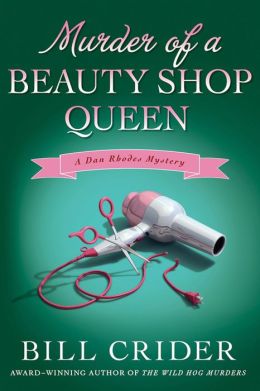
Murder of a Beauty Shop Queen: A Dan Rhodes MysterySince Christmas, I've continued to read, but haven't found the time to do much reviewing, so here's a sampling of what I've read, and if I get a chance to get back to reviews, maybe I'll catch up.

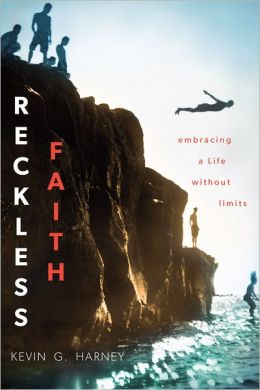
Reckless Faith: Embracing a Life without LimitsBill Crider's latest Dan Rhodes book Murder of a Beauty Shop Queen (2012, St. Martin's). Fans of small-town murder mysteries and Crider's characters and writing style will be well-pleased with this new installment. (5 out of 5 reading glasses).

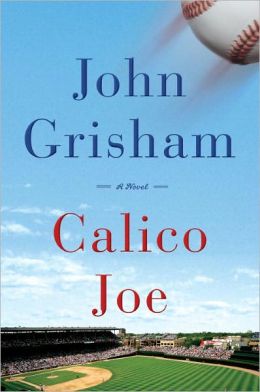
Calico JoeReckless Faith by Kevin Harney (2012, Baker). This book seems to be challenging, but has some struggles along the way (I really do need to get a review done of this work). (3.5 out of 5 reading glasses)

Calico Joe by John Grisham (2012, DoubleDay). I've read Grisham's efforts at writing fiction about football and enjoyed them enough. Here's one set on the baseball diamond. Baseball fans will like it - I did. (4 out of 5 reading glasses)

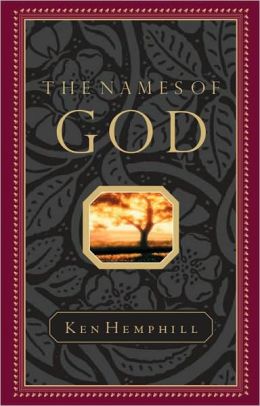
The Names of GodThe Names of God by Ken Hemphill (2001, B&H). This is an excellent devotional read based on a series that Dr. Hemphill has preached a number of times. Read it for the devotional content. (4 out of 5 reading glasses).


Monday, January 7, 2013

Breaking Anchor – Henry Melton

Breaking Anchor©2012  Wire Rim Books, Hutto, Texas

Henry Melton just keeps on churning out books. He is constantly working on making his stories available through print, e-publishing, and occasionally he releases one of the good ones serially online. His longest-running series of Young Adult Science Fiction is the Small Towns, Big Ideas series which follows high school-aged heroes and heroines from small-town America into some interesting adventures that have included extra-terrestrial life forms, super-intelligent technology, and time travel. He’s also hard at work on the recently developed The Project Saga, which started in modern times but promises to carry readers drastically into the future from Earth and into the far reaches of the universe.

But today’s story is part of the Home Planet Adventures series. Tommy Dorie is on the verge of becoming a man. He’s still caught up in the throes of high school finals week when his father Nick sends him on another goose chase. Can Tommy risk ignoring yet another pop quiz, or could it really be serious business this time around? Since the loss of his mother just a few months before the story begins, Tommy and Nick have developed a strained relationship highlighted by communication through text codes developed by Nick because of his secretive job.

Tommy finds himself caught up in corporate battles that really belong to Nick. His only hope for survival is to stay away from the company goons who are after the Dorie family sailboat. The secrets keep revealing themselves as Tommy works to rescue Nick and his co-workers along the way.

As per usual, Melton treats his readers to a book that is chock full of information about a lesser known pastime (sailing in this case) and technology. Breaking Anchor is another of those “hope it’s not true, but maybe . .  .” stories that calls the reader to think about the big what ifs of life that so often are just ignored in preference for regular life. Between the pages you’ll find action, intrigue, passion, and excitement. And a smarter than average dog. I have to give Melton another five-reading glasses review for this little gem.

—Benjamin Potter January 7, 2013

[This book was received from the publisher for the purpose of review. All opinions are my own. No other compensation has been received in order to influence the reviewer.]

Tuesday, January 1, 2013

Ten Myths about Calvinism – Kenneth J. Stewart


Ten Myths About Calvinism: Recovering the Breadth of the Reformed Tradition
©2011 IVP Academic, Downers Grove, IL

In recent years the Calvinist theology has been seeing more than a modicum of attention among evangelical leaders (especially among some of the younger leaders). This fascination with what proponents prefer to call Reformed Theology is sweeping across denominational lines. It is also sparking quite a controversy among leaders of these denominations (including my own), whether that controversy is deserved or not. On one side of the argument are those who are buying into the teachings of Calvin as they have sifted down through the centuries. These adherents, including Calvinists of long standing and new converts to the theology, stand strong in their beliefs, ready to defend the theology as much as the Savior we all serve.

In the other corner we have those who do nothing except find fault with Calvinism. This is not to say that all of those who are dubious of this new interest in Calvinist theology land firmly in the full opposite extreme known as Arminianism, but the lines are drawn as to Calvinist and Not. And more often than not, each side is convinced that they have God’s mind figured out. I work diligently to foster my friendships and relationships with people of both sides because it is more our responsibility to show the love of God than to win arguments about our interpretation of His Word. I believe this is part of what Stewart is trying to accomplish with his historical sketch of Reformed Theology.

The book is an apologetic in defense of historical Calvinism. Stewart prefers the terminology “Reformed” to Calvinism, because the theology encompasses a greater span than simple John Calvin and Geneva in the 16th Century. In doing this, Stewart has identified four “myths” being spread by Calvinists and six that are being spread by non-Calvinists. All ten of which he says are historically inaccurate, and should not be spread any longer. He deals first with those myths spread by people in the Calvinist camp, and then moves to those supported by opponents of Calvinism:

  • One Man (Calvin) and One City (Geneva) Are Determinative
  • Calvin’s View of Predestination Must Be Ours
  • TULIP Is the Yardstick of the Truly Reformed
  • Calvinists Take a Dim View of Revival and Awakening
  • Calvinism Is Largely Antimissionary
  • Calvinism Promotes Antinomianism
  • Calvinism Leads to Theocracy
  • Calvinism Undermines the Creative Arts
  • Calvinism Resists Gender Equality
  • Calvinism Has Fostered Racial Inequality 
I must admit that I am familiar with about seven of the ten “myths” identified. Not being strongly steeped in Calvinist doctrine might attest to my lesser familiar stance with the others. I should also point out that when the author addresses the tenth of these myths that I found less defense of Calvinism than simple histrionics.

With a purpose to provide a defense for Presbyterian and Reformed churches both from errant thinking within and attack from without, Stewart does a fair job. What results though is less of an apologetic than a study of fifteenth to seventeenth century theology (other time periods are dealt with, but the major focus is in this window). Reading this book will not move most people from one camp to the other, but perhaps it will provide a better understanding of who the early Reformers are and what we should apply to their teaching.

The book will have limited appeal to those who are studying the church of the Reformation Era, those (like myself) who are trying to get a better handle on what Calvinists do and/or should believe and teach, and to those who are looking for solid defense for why they have landed in the camp of Calvinism.

As a history book, this is a good read. As a textbook, it is a fair resource. As a wealth of information helpful to the general reader, it falls rather flat. For anyone outside of the Presbyterian tradition, the book will not speak very loudly. For those (for instance) in the new movement of Calvinism in Baptist or Evangelical Free churches, will discover only a rare tidbit of helpful information. Because of this I rest the book in a balanced three of five reading glasses.

—Benjamin Potter, January 1, 2013


Thursday, December 20, 2012

Chasing Christmas – Steven Hunt


Chasing Christmas
©2012 Harbour Lights, Aztec, NM

I want to get the review for this year’s Christmas read up before Christmas. That way, if you are interested in a good book that’s set during the Christmas season you’ll have time to snag a copy and read it during the holidays. I know, I know, Christmas is just around the corner. But you can do like I did and get an e-copy (they deliver immediately from all over the wwweb). I must also admit that I have a special reason for touting this particular book this particular Christmas. The author was my very first college roommate. Yes, before either of us knew anything we roomed together in an early-enrolment summertime program at Oklahoma Baptist University (shout out to all our Academy ’80 buds). Since those days, both Steven Hunt and I have grown up and had a variety of careers. Steve’s latest endeavors have brought him to the arena of Christian fiction. And he’s pretty good at the stuff.

One week before Christmas a despondent and down-hearted Teddy Whitaker decides the best way for him to handle life is to make his disappear. He’s lost his parents, his business, his daughter, his wife and his best friend all in a matter of months. So the story opens with a very discouraged hero aiming his vintage Camaro for the local ‘Dead Man’s Curve’ for one final ride. What he gets is the ride of a lifetime.

Miraculously spared from his impending doom, Teddy must learn three lessons from three unlikely teachers and make it home before Christmas morning or he will be dead and never see his family again. Accepting the stakes through a fog of doubt, Teddy decides to give it a try. After all, he really has nothing to lose.

This story, along with the fact that it is a Christmas tale, is a story of homage. In the vein of Dickens’ classic “A Christmas Carol” and Frank Capra’s “It’s a Wonderful Life,” our hero interacts with otherworldly beings that help him to move beyond himself and learn the most important lessons in life. Hunt even pays special homage to some of these timeless classics in the telling of the story, although the angel characters have no knowledge of them. The book is also an honor to the author’s preacher uncle (to whom the book is dedicated, whom I have met, and who makes his own appearances in the story from time to time) who taught Hunt the very lessons that Teddy learns over the course of a week. Finally, the greatest homage is paid to the King of kings about whom the original Christmas story revolves.

This book has everything a good Christmas story should have: action, suspense, romance, conflict, and a spiritual side as well. Thanks for another good story to read by the Yule Log, my friend. You’ll be glad to receive the four and one-half out of five reading glasses, and your readers will want to get copies of this book to stuff all the Christmas stockings with. For my readers, get a copy of this book for yourself and one for a friend, and hop on over to the American Christian Fiction Writer’s (ACFW) bookclub, join and vote for this book.

Merry Christmas—Benjamin Potter, December 20, 2012

[This is a review of the ebook version (for Nook; also available for Amazon's Kindle). The book is also available in trade paperback.]

Popular Posts

Labels