Saturday, April 16, 2011

The Canary List – Sigmund Brouwer

© 2011 WaterBrook Press, Colorado Springs

Sigmund Brouwer is one of my “go to” authors when I want to read something that I will most likely enjoy. So when I found his upcoming novel on the list for review from WaterBrook, I snapped at a copy.

Crockett Grey is a teacher of special needs students. His life was turned upside down when his twelve-year-old daughter died of cancer. He lost his family and has to build his relationship with his son on alternate weekends. Enter Jaimie Piper, a troubled foster child who battles demons, literally.

The web only begins to develop when Crockett gets caught up in the world of Vatican espionage, spiritual warfare, and Church politics. We learn that as the sitting pope lies languishing in his bed, there are a number from the college of Cardinals who are jockeying to replace him. We also learn that one of those has given himself over to “perfect possession”.

Where does a special needs teacher fit in? His student Jaimie can sense Evil, and that Evil must show itself in her presence. So when she turns to Crockett for help, he finds himself fighting a frame-up of child molestation and trafficking in child porn. He doesn’t know who to turn to nor who to trust.

Fans of intrigue and spy novels will enjoy this read. I know I did. I give it four out of five reading glasses.

—Benjamin Potter, April 13, 2011


[Disclaimer: I received this book for free from WaterBrook Multnomah Publishing Group for this review.]

Wednesday, April 13, 2011

The Dead Man: Ring of Knives – James Daniels

© 2011 Adventures in Television, Inc.

The second installment of the new DEAD MAN action/adventure/horror e-series is available at your favorite on-line bookstore now. (For some background on the series originated by Lee Goldberg and long-time writing partner William Rabkin click on this link.)

Picking up where Goldberg and Rabkin left off from episode one, Daniels takes us into the mind of Matt Cahill as he struggles to make sense of all that is happening to him. He’s found reports of another person who has exhibited some of his hallucinatory (?) episodes that were chronicled in Face of Evil. In this installment, we follow Cahill for one long and scary night. He finds, not the other tormented soul, but his psychiatrist who has now become a patient at the Carthage Mental Health Center. The good doctor advises Matt to confront his demons with the right question at the right time or else it might be too late.

During the night, Matt encounters a sadistic nurse with an almost unpronounceable name, another nurse (ally or enemy, who ever knows?), a gaggle of gruesome aides, and an obligatory damsel in distress. We follow along as he trips down memory lane trying to recapture the memory of his deceased wife, as well as another frightening outing for our hero come back to life.

Daniels does a very good job tying his story to the foundational story of the series creators. One thing that I miss is the attachment to his grandfather’s axe which gets only a cursory mention at the beginning of the story. Otherwise, if you like action, adventure, horror, blood, and gore, you’re destined for one of your favorite stories. I’ll give it four out of five reading glasses, for the sake of the missing axe.

—Benjamin Potter, April 13, 2011

Monday, March 21, 2011

High Midnight – Stuart Kaminsky

©1981 St. Martin’s, New York

The great American film professor, Stuart Kaminsky (1934-2009), introduced readers to Toby Peters in his debut novel Bullet for a Star in 1977. High Midnight is the sixth outing for the Hollywood private investigator who reminds us of many of the hard-boiled detectives of earlier eras. (Personal note: it’s only my fifth Peters reading—anybody wants to send me an elusive copy of Never Cross a Vampire, I’d be glad to read it.)

Peters himself is an icon from days gone by, practicing his stock and trade in the 1940s. This time, he finds himself wrangled into a case working for none other than Gary Cooper. He’s roped into this one because the dentist from whom he sublets his office (“Sheldon P. Minck D.D.S., S.D./ ‘Dentist and Oral Surgeon’”) poses as Toby in order to meet some of the famous people that he is in the habit of working for. Someone is trying, so it seems, to force Cooper to make a B movie with a handful of B actors, a B director, but a pretty fair script.

Throw in a semi-retired Chicago mob boss, three dead bodies, and a hunting party with none other than Ernest ‘Papa’ Hemingway, and you have the makings for a first-rate mystery story. And, as you might have guessed, Kaminsky through the voice of Peters, delivers. In his methodical fashion, our hero works out the whys and wherefores of the murders, the attempted blackmail, and the (almost) identity theft a couple of steps ahead of the police. Just enough to keep himself from being indicted for the murders!

There are several things to enjoy about a good Toby Peters Mystery: fast pacing, historical references from news and newsreels, and super cameo appearances to compliment the staring roles of some of the greats in the heyday of the silver screen. From Hollywood vernacular, I give High Midnight a hearty thumbs up. For constant readers of these reviews, I attribute five out of five reading glasses.

—Benjamin Potter, March 21, 2011

Friday, March 4, 2011

The Next Christians – Gabe Lyons

© 2010 Doubleday, New York

Gabe Lyons is the founder of Q (qideas.org), an organization that studies society and looks for answers. I was first introduced to this young Christian thinker when he coauthored unChristian. I was intrigued, challenged by, and sometimes enraged at the research conclusions that he and co-author David Kinnamon reached. They were not painting a very bright picture for the Christian community, but one that in some circles, is well-deserved.

The future seems brighter for Christianity in Lyons’ new book—not because the traditional Christians are really changing their ways, but because those who are finding faith in this new generation are affecting a change. This new generation of Christians are those who the author has named “the next Christians”.

According to Lyons, these next Christians are adapting to the changing scenery in the western world, not changing their faith, but living it incarnationally. They take their cues from the record of the Bible as a whole not (as he sees it) choosing the fall and redemption stories at the expense of the creation and completion stories. In so doing, he lauds this new generation of Christians for living lives with a view to restoration. He includes a number of examples of people from all walks of life who have seen a need and, without forcing their faith on others, have still let their faith drive their action—to restore the world to the way God had designed it (or take a step toward restoration, at any rate).

While the author hints at this sort of lifestyle occasionally leading to the conversion to gospel-driven faith of those who are influenced by these next Christians, it seems to be more of a happenstance than a purpose. Yes, I will agree that the traditional (20th Century) evangelical emphasis on evangelism at any cost has developed within the Christian community an almost mercenary mindset that ignores the person in order to reach their soul (usually toward the end of marking another tic on the scratch-sheet of ‘souls saved’), I am not convinced that disguising our faith and only mentioning our Jesus is the answer either.

I suppose another struggle that I have with this book is its dismissal of anything over thirty years old. This may not be the author’s intent, but it is the message that comes across. Have we gotten things wrong through the years that should be addressed? The answer would certainly be yes. Should we dismiss all that has gone on over the last three to five hundred years? I don’t think so. If I were to analyze my own response to the message of this book, I would say that what leaves the distaste in my mouth is the tone of arrogance that comes across (which is exactly the message that I believe Lyons would not want to be perceived).

The book is not all bad, but it isn’t necessarily the aid to bringing about change that it wants to be. 2 ½ reading glasses.

—Benjamin Potter, March 4, 2011

[Disclaimer: I received this book for free from WaterBrook Multnomah Publishing Group for this review.]

Tuesday, March 1, 2011

Henry Melton - More to Enjoy

Henry Melton (I've reviewed a number of his books, so you should recognize the name) is doing something new that readers of his stories will enjoy. It's serialization of new stories. Check them out here.

Monday, February 28, 2011

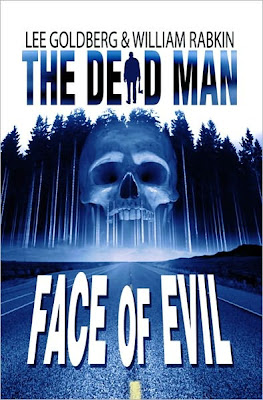
The Dead Man: Face of Evil – Lee Goldberg & William Rabkin

© 2011 Adventures in Television, Inc.

When I found out that noted author Lee Goldberg had produced another idea that he intended to work on with other great writers, and then that he was offering a limited number of prepublishing ebooks for review, I made contact. What I received was an eARC (?) for the new THE DEAD MAN series debut.

Matthew Cahill, or rather his frozen body, is discovered beneath tons of avalanche—the victim of a snow-skiing tragedy. When the ME starts to do an autopsy, the lumber mill sawyer begins to bleed. This impossibility after three months of burial under a mountain of snow leads to a variety of twists and turns.

Cahill learns to live again, romance again, and even fight again. This adventure story has engaging characters, elements of finely tuned horror stories, and some fun thrown in for good measure. I’m looking forward to future installments to see where Cahill’s adventures take him. This for several reasons—not the least of which is the reasonably priced packaging in ebook format (which this gem of a story is available in from Kindle to Nook to every ereader in between). You’ll want to get a copy today because the story is fast-paced, enjoyable, and short enough to read in a single afternoon or two. What else can I give this made for electronic age adventure story (and series, I expect) but five reading glasses.

—Benjamin Potter, February 28, 2011

Sunday, February 27, 2011

Road Kill – Kinky Friedman

©1997, Simon & Schuster, New York

In this latest foray into the world of amateur detection, erstwhile country singer (and later Texas politician), Kinky Friedman takes an oddly new twisting road. Again the author plays the starring role in a mystery.

Waking up to find himself halfway to crazy-ville, Kinky has a discussion with a gypsy in the bathroom mirror that leads his friends to send him on a sabbatical trip with long-time friend Willie Nelson on the Honeysuckle Rose (Willie’s tour bus). The trip, while restoring some of Friedman’s sanity (if indeed there is any) drops a new case in our sleuth’s lap—one involving Indians (of the Native American variety), roadies, curses, and pot-shots.

In the end, Friedman and friends find themselves investigating age-old Indian legends and Willie’s ex-wives.

Kinky is his usual irreverent self in reporting this tale of music-world travel and murder. If you’re a fan, you’ll still be one. Three out of five reading glasses.

—Benjamin Potter, February 27, 2011

Escape from Church, Inc. – E. Glenn Wagner

© 1999 Zondervan Publishing House, Grand Rapids

Writing with Steve Halliday, Glenn Wagner presents a book that calls pastors to be, well, pastors. The root of the word pastor hails us back to the idea that the pastor is a shepherd. He is not THE Shepherd, but a shepherd who works as an extension of The Good Shepherd (Jesus Christ). The premise of the book is that the biblical model for the pastoral position is one of a shepherd—not the modern trend to corporate-style leadership.

Through the course of the bank, the author guides us to biblical evidence of a shepherd’s model for the pastor. Shepherds are relational, while other leadership models focus on bottom-line equations. He deals with the needs of the flock as well as the call of the pastor.

Overall, the book is a healthy look at the church and the position of her leader. Toward the end of the book is a chapter I expected to be extremely helpful—interviews with several pastors about their shepherd-style leadership approach. I found their responses less than helpful, but the bulk of the book is well worth the reading. The audience for this book is limited indeed. Church members in general will find the book informative and interesting, but not addressing their personal lives. On the other hand, this is a book that I would recommend for any pastor or church minister. Because of the excellent advice within its covers, I give the book 4 and one-half out of five reading glasses.

—Benjamin Potter, February 27, 2011


Saturday, February 5, 2011

How Good Is Good Enough? – Andy Stanley

© 2003 Multnomah Publishers, Sisters, OR

I had been wanting to read several of Andy Stanley’s books—particularly this one for several years. So when I found a copy of it on a ‘giveaway’ table at a pastor’s conference, I jumped at getting a copy. Stanley is the author of such books as Visioneering and Choosing to Cheat. He is an excellent communicator, and this little book is evidence of that fact. Consequently, I am glad I found the copy.

Stanley handily addresses the popular philosophy of ‘good people go to heaven.’ Without being preach-y or condescending, the author opens the reader’s eyes to questions about eternity, fairness, and truth. That I espouse the same ideology as Stanley may certainly make me biased in my opinion of his conclusions, but this little book is one that is well worth the couple of hours of your time it will take to read it.

Who should read this book? Anyone who wants to get a handle on what heaven and eternity are all about. Anyone who has questions about his or her final destination. Pick up a copy, you’ll be glad you did. Five reading glasses.

—Benjamin Potter, February 5, 2011

The Affair of the Wooden Boy – Ian Doyle

© 2011 [eBook by Mel Odom] New Pulp Press

Occasionally, as an amateur reviewer who posts his opinions in the blogosphere, I get the chance to cybermeet new authors and even read their stuff. Such is the case with this short eNovel. I was fortunate enough to get one of a few review copies in my email inbox. One of the pleasant things about such situations is that I get to sample new authors and even different genres than I normally read.

James Stark is also known as Lord Gallatin and offers his services to the local constabulary when they are unable to solve mysteries in their line of duty. At times he works privately when clients are not inclined to involve the police. His wife, Mina, narrates the tale and is heavily involved in helping her husband solve the mysteries.

It took me a couple of chapters to realize that this was more than a historical story set in England, more than another Holmesian journey into investigative techniques. As the story developed I found glimpses of Gothic and Historical Romance coupled with Sleuthing and magic. In this particular tale, Simon (a little wooden boy) shows up on the Stark doorstep. We discover that he has been bewitched, and the only thing that saved him is the love of his little wooden puppet (who now held his life-force while some enemy was in his body).

I found that this genre is not my cup of tea, but suspect if one likes gothic-style fantasy, and puzzle stories you will enjoy this outing with the Starks, and you will also enjoy the fact that Mina is more than just a trophy wife. Another thing you’ll like is the more affordable price that accompanies electronic books and stories. As always click on the cover art to order the book. Three and one-half reading glasses.

—Benjamin Potter, February 5, 2011

Popular Posts

Labels