Showing posts with label Juvenile Literature. Show all posts

Tuesday, June 27, 2017

NIV Kids’ Visual Study Bible


©2017 Zondervan, Grand Rapids


A Study Bible. For Kids. What a neat idea! I know that my children, raised in a Christian home, coming to know Christ as Savior at an early age, and now growing up in a society that no longer values the Bible as much as it did, say 40 years ago when I was a kid, and I have been looking for something that might be a good study tool for them as they come to a place where learning more about the Bible, its lives and times. Perhaps this new offering from the Zondervan publishing group might fit the ticket.


As a book for reference and study use, I would give the publishers fairly high marks for the physical construction of this Bible. It is a hardcover with pretty sturdy binding that includes a built-in place ribbon for marking one’s place when he/she puts the volume down. I can also say that the cover and the contents (“over 700 images inside!” boasts a colorful sticker on the front cover) are vibrant and eye-catching. While the pages aren’t the delicate and precious onion-skin type pages you might find in a high-end, leather-bound copy of the Scriptures, they are thin enough to keep the nearly 2000-page book from being unwieldy.


I think that it would be good to look at what this Bible claims about itself to help in assessing its usability for kids.


First of all as a Bible for kids. The question that comes to mind is, what age and reading level constitutes a “kid”? I would want to settle into the 9 – 12 age range (give or take a year or two), which would place the reader in the 4th – 6th grade reading level. Going with the NIV for the text of the book could be argued as a less than stellar decision because of the eighth-grade (estimate) reading level of that version. When you want to reach kids with a study resource, it might be better to use a more readable translation (although going with the third-grade level NIrV might be going a bit too shallow) when Americans often tend to top-out at the sixth-grade level.


The book also says right up front that it is “visual” and announces (albeit with a sticker) the presence of “over 700 images”. I did not take the time to count the images, but the book is packed with them. Some are photographs that illustrate the portion of the Scripture that they accompany. Other images are artists’ renderings. All of these are okay, and seem to be of really good quality, but the images that caught my eye are the charts, graphs, and visuals that give a thumbprint explanation of such things as the difference between the Jewish months/calendar and our modern understanding of the year. From time to time a margin will be dedicated to the “Life Line” of one of the biblical characters (such as Jacob, Moses, or Herod the Great).


Apart from the pictures scattered throughout the pages, what makes this a “study Bible”? Nearly every margin contains some quick and simple commentary on the Scriptures of that page. These comments are rarely more than a simple paragraph, but help in the understanding of the ways and words of the Bible. Also, each book of the Bible is preceded by a full-page background of the book: Who wrote it? Why was it written? What are the major themes? And so on, to help the reader get a better understanding of the book they are reading. At the back of this volume are a table of weights and measures to aid in comparing biblical amounts to modern equivalents, some obligatory maps (the Exodus, Paul’s missionary journeys, and the like), and a couple of indices to help find the “infographics” and maps scattered throughout the text. What’s missing is even a simple concordance to aid the reader in finding the passage(s) he/she wants to study.


Overall, I think this is an excellent effort to put “dig deeper” Scriptures into the hands of boys and girls. I would recommend it for children ages 10-13 (around 4th – 6th grade). At a cover price of $32.99 (US) it would be a good investment in the Christian growth of your child or grandchild. I would give the book 4 out of 5 reading glasses for doing a good job of achieving the publisher’s goals.


—Benjamin Potter June 27, 2017


[This book was provided free of charge by the publisher for purposes of this review. The opinions are my own.]

Friday, September 6, 2013

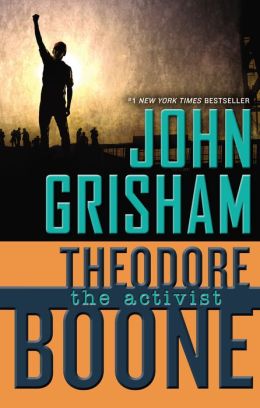
Theodore Boone: The Activist – John Grisham


 Theodore Boone: The Activist
© 2013 New York, Dutton Children’s Books

This is the best Theo Boone yet!

There now that the blurb is out of the way, you’ll want to run down to the local library or bookstore and obtain a copy of this little YA gem.

This time, Theo puts his debate team skills to not only defeat his opponents from the cross-town rival team, but to try to help save his friend’s family farm. It seems that all the politicians in the state and the businesses in the county want to push through a by-pass project which will displace a number of families on the outskirts of town at a cost of multiple million dollars while schools are getting shorted in the funding department.

Theo learns some valuable lessons about activism and ethics as he works through his case this time.

This is some of the better writing involved in the Theodore Boone series (see opening sentence above). It is one of the very best examples of internal struggle available on the current market. The moments where our protagonist wrestles with what is right, wrong, and just are on a par with FrankStockton’s classic short story “The Lady, or the Tiger?

I can’t hold back my five reading glasses for this excellent example of juvenile suspense.

—Benjamin Potter, September 6, 2013

Monday, August 11, 2008

Extreme Makeover – Henry Melton


© 2008 Wire Rim Books, Hutto, Texas

Once in awhile you read something that is really fun. If you pick up a Henry Melton book that’s what you’ll find. Extreme Makeover is his third in a series he’s called Small Towns, Big Ideas. The first (which I haven’t yet had the opportunity to read), Emperor Dad won the Darrell Award (from the Science Fiction community) for Best Novel. The second, Roswell or Bust, was my introduction to Melton’s writing and I found it to be highly engaging. The newest release is certainly good company for its predecessors.

Deena Brooke, overweight and self-conscious, living a sad existence because of an overprotective mother, brushes with death on a stormy school trip. The result of that brush is the invasion of alien nanobots in her body. The tiny robots repair her damaged tissues and help her to become more than she ever was. Her adventure includes developing new attitudes and physical strength, falling in love with the mysterious smart boy who pretends to be average, and saving the world from ultimate disaster.

Luther—who actually turns out to be 20-year-old Luke—is on the run from Las Vegas bad guys who have already killed his parents and are after some secrets that he doesn’t even know he holds. As the two young people discover the new talents acquired by Deena, they figure out the presence of the nanobots and how they are being used by aliens to destroy the Earth.

As always this is a superb example of young adult science fiction. The story reads quickly and keeps the reader wanting to turn page after page. The mixing of several plots is not only not distracting, but it makes the story more intriguing. Hats off to you again, Henry. Keep churning out those stories. Readers will want to get their hands on all the stories in this series as they are released almost too fast to believe.

Extreme Makeover is again rating four and three-fourths reading glasses. Good reading, good entertainment, just plain good fun.

Benjamin Potter, August 11, 2008

Friday, July 6, 2007

Bridge to Terabithia – Katherine Paterson


One moment between the covers of Bridge to Terabithia reveals why Katherine Paterson’s walls are filled with awards. Not only did this volume win the coveted Newberry Medal but many other awards as well. As a matter of fact Paterson’s writing has won literary awards time and time again. I first encountered Paterson and Bridge as an education student earning teacher certification. I was taking the class we lovingly called “Kiddie Lit.” I re-read it because a film-maker decided to adapt the story for the screen and the result has been released on video. I’m hoping to view the movie soon, and at the same time hoping not to be overly judgmental toward what the previews promise to be completely different from the book.

Why is it a bad thing for the movie to depart from the book? Because the book is such a great story about childhood, having little or nothing to do with fantasy, that’s why. Bridge to Terabithia is the story of Jesse and Leslie, two fifth-graders who become friends and whose friendship is the occasion for creating a new land where Jess is king and Leslie is queen.

Paterson deals with a variety of issues that budding adolescents deal with: new relationships, school bullies, religion, and others. She makes the most exquisite use of foreshadow that I have read in years. The tragedy that is the premise for the book (the building of a bridge to the fantastical land of Terabithia) is foreshadowed from the opening scenes of the book to the Easter service where Jesse is bored and Leslie fascinated.

This book is great writing on a number of levels. The children are believable as children, the settings are real. Bridge to Terabithia has it all—great characters, great stories, great scenes, great dialog, and it is an award winner. Read it before seeing the movie, read it instead of seeing the movie, read it for the first time, read it again for the first time, just read it.

—Benjamin Potter, July 6, 2007

Popular Posts

Labels