©2011 IVP Academic, Downers
Grove, IL
In recent years the Calvinist theology has been seeing more
than a modicum of attention among evangelical leaders (especially among some of
the younger leaders). This fascination with what proponents prefer to call
Reformed Theology is sweeping across denominational lines. It is also sparking
quite a controversy among leaders of these denominations (including my own),
whether that controversy is deserved or not. On one side of the argument are
those who are buying into the teachings of Calvin as they have sifted down
through the centuries. These adherents, including Calvinists of long standing
and new converts to the theology, stand strong in their beliefs, ready to defend
the theology as much as the Savior we all serve.
In the other corner we have those who do nothing except find
fault with Calvinism. This is not to say that all of those who are dubious of
this new interest in Calvinist theology land firmly in the full opposite
extreme known as Arminianism, but the lines are drawn as to Calvinist and Not.
And more often than not, each side is convinced that they have God’s mind
figured out. I work diligently to foster my friendships and relationships with
people of both sides because it is more our responsibility to show the love of
God than to win arguments about our interpretation of His Word. I believe this
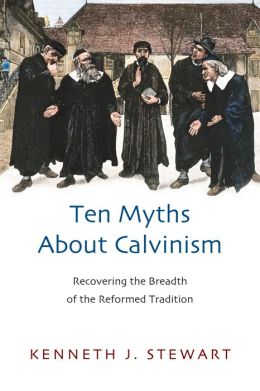
is part of what Stewart is trying to accomplish with his historical sketch of
Reformed Theology.
The book is an apologetic in defense of historical
Calvinism. Stewart prefers the terminology “Reformed” to Calvinism, because the
theology encompasses a greater span than simple John Calvin and Geneva in the 16th
Century. In doing this, Stewart has identified four “myths” being spread by
Calvinists and six that are being spread by non-Calvinists. All ten of which he
says are historically inaccurate, and should not be spread any longer. He deals
first with those myths spread by people in the Calvinist camp, and then moves to
those supported by opponents of Calvinism:
- One
Man (Calvin) and One City (Geneva)
Are Determinative
- Calvin’s
View of Predestination Must Be Ours
- TULIP
Is the Yardstick of the Truly Reformed
- Calvinists
Take a Dim View of Revival and Awakening
- Calvinism
Is Largely Antimissionary
- Calvinism
Promotes Antinomianism
- Calvinism
Leads to Theocracy
- Calvinism
Undermines the Creative Arts
- Calvinism
Resists Gender Equality
- Calvinism
Has Fostered Racial Inequality
I must admit that I am familiar with about seven of the ten
“myths” identified. Not being strongly steeped in Calvinist doctrine might
attest to my lesser familiar stance with the others. I should also point out
that when the author addresses the tenth of these myths that I found less
defense of Calvinism than simple histrionics.
With a purpose to provide a defense for Presbyterian and
Reformed churches both from errant thinking within and attack from without,
Stewart does a fair job. What results though is less of an apologetic than a
study of fifteenth to seventeenth century theology (other time periods are
dealt with, but the major focus is in this window). Reading this book will not
move most people from one camp to the other, but perhaps it will provide a
better understanding of who the early Reformers are and what we should apply to
their teaching.
The book will have limited appeal to those who are studying
the church of the Reformation Era, those (like myself) who are trying to get a
better handle on what Calvinists do and/or should believe and teach, and to
those who are looking for solid defense for why they have landed in the camp of
Calvinism.
As a history book, this is a good read. As a textbook, it is
a fair resource. As a wealth of information helpful to the general reader, it
falls rather flat. For anyone outside of the Presbyterian tradition, the book
will not speak very loudly. For those (for instance) in the new movement of
Calvinism in Baptist or Evangelical Free churches, will discover only a rare
tidbit of helpful information. Because of this I rest the book in a balanced
three of five reading glasses.
—Benjamin Potter, January 1, 2013

 Find a copy of this old story to enjoy over a cup of joe.
(three and one-half reading glasses)











 Are you looking for a great stocking stuffer? Well here's just the thing. You can order my little Christmas story from


